
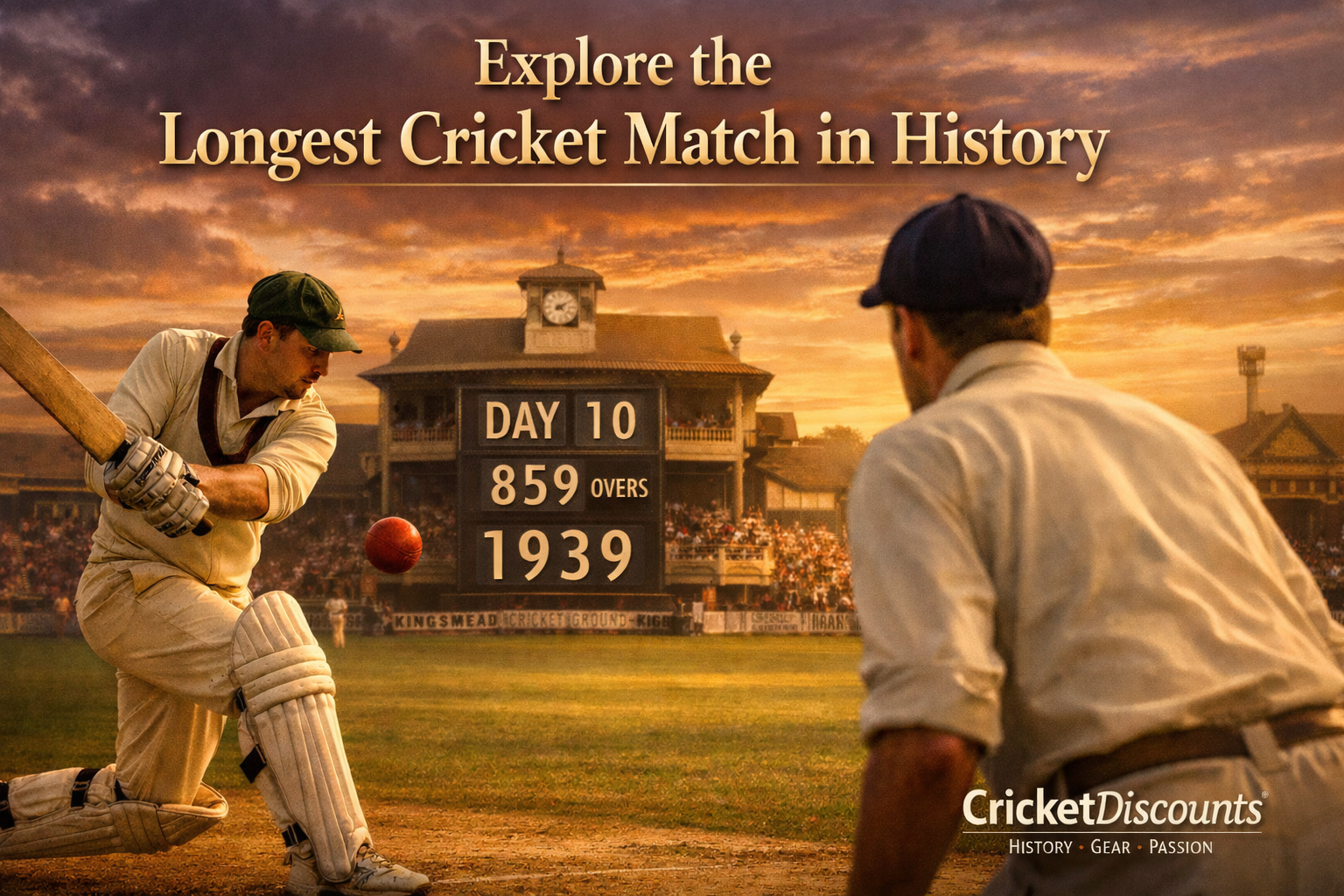
Explore the Longest Cricket Match in History
The Longest Cricket Test Match remains the longest cricket match in history. It was played in 1939 between South Africa and England. What makes it unique is that it had no time limit. The match continued for days until a result was achieved. Or so everyone thought.
In an era before tight schedules and television contracts, cricket had a different rhythm. The Longest Cricket Test Match lasted ten days. It pushed players to their physical and mental limits. Even today, it stands as one of the most fascinating stories in the sport’s past. Let us explore how this incredible event unfolded and why it still captures attention.
Background or Early History of the Topic
Before 1939, Test cricket did not always follow a fixed five-day format. Early Test matches were sometimes called “timeless” because they were played until a result was achieved. Draws due to time were considered unsatisfactory.
The famous match took place in Durban, South Africa, in March 1939. South Africa hosted England in what would become the fifth and final Test of the series. Both teams were strong and determined to win.
At that time:
- Test matches often lasted six days.
- Rest days were common.
- Travel schedules were flexible.
However, this particular match had no fixed end date. It would continue until one side won. No one expected it to stretch into history books.
Key Events and Major Milestones
The Start of the Marathon
The match began on 3 March 1939. England batted first and scored an impressive total. Len Hutton, one of England’s finest batters, played a key role in building the innings.
South Africa responded strongly. Their batters showed patience and discipline. The pitch remained good for batting, which made dismissing players difficult.
Records Began to Fall
As days passed, it became clear that this was no ordinary Test.
- The match crossed six days.
- Then seven.
- Then eight.
By the tenth day, players were exhausted. Spectators had come and gone. Yet the game continued.
Final Twist
England eventually set South Africa a target of 696 runs to win. Remarkably, South Africa came very close. They reached 654 for 5.
At this dramatic moment, the match had to be abandoned. England’s team needed to catch their ship home. Travel arrangements could not be delayed further.
After ten days and 859 overs, the match ended in a draw. Ironically, the timeless match ran out of time.
Fun Facts and Lesser-Known Stories
The Longest Cricket Test Match is full of surprising details. Some of these facts make it even more fascinating.
1. It Lasted 12 Calendar Days
Although there were ten playing days, rest days stretched the event over 12 calendar days. That is nearly two weeks of cricket.
2. Over 1,900 Runs Scored
The teams combined for 1,981 runs. This was extraordinary for that era.
3. Huge Individual Efforts
Several batters played long innings under intense pressure. Bowling workloads were equally heavy. Fast bowlers delivered countless overs without modern fitness support.
4. No Television Coverage
There was no live broadcast. Updates traveled slowly through newspapers and radio reports. Fans relied on daily summaries rather than instant highlights.
5. It Ended Timeless Tests Forever
This match convinced cricket authorities that timeless Tests were impractical. Soon after, five-day Tests became the global standard.
If you enjoy stories like this, you can also explore other legendary moments in our History and Fun Facts About Cricket section on CricketDiscounts.com.
Records, Impact, or Legacy in Cricket
Longest Test Match Ever
The Longest Cricket Test Match remains the longest officially recognized Test in cricket history.
Key numbers include:
- 10 playing days
- 859 overs bowled
- 1,981 total runs scored
No other Test has lasted longer. Modern cricket schedules make such a scenario impossible.
Physical and Mental Challenge
Players in 1939 did not have:
- Advanced sports nutrition
- Professional physiotherapists
- Rotational squad systems
Yet they played for ten days under the hot South African sun. Their endurance was remarkable.
Change in Cricket Rules
After this match, cricket administrators realized that timeless matches created serious logistical issues. Travel plans, financial costs, and player fatigue made them risky.
As a result:
- Timeless Tests were discontinued.
- Five-day limits became standard.
- Draws due to time were accepted as part of the game.
This match shaped the structure of modern Test cricket.
Why This Topic Still Matters Today
The Longest Cricket Test Match is more than a historical curiosity. It represents a different era of cricket.
Today, fans enjoy fast formats like T20 and one-day matches. Even five-day Tests can feel long in the modern world. Yet the 1939 match reminds us of cricket’s deep roots.
It also highlights:
- The evolution of scheduling
- The importance of player welfare
- The balance between tradition and practicality
In recent years, there have been discussions about preserving Test cricket’s value. Stories like this strengthen the argument that Test cricket is the ultimate format for endurance and skill.
For readers who enjoy comparing cricket eras, our cricket history features offer more insights into how the game has evolved over time.
The Human Side of the Story
Beyond records, this match had emotional weight. Players battled fatigue and pressure. Some knew that global tensions were rising, as World War II would begin later in 1939.
Many cricketers’ careers were interrupted by the war. The Durban timeless Test became one of the last great spectacles before the world changed dramatically.
This gives the match deeper meaning. It stands at the edge of two eras: the golden age of traditional cricket and a world about to enter conflict.
Comparison With Modern Cricket
If we compare that match with today’s cricket, the differences are striking.
Then:
- Unlimited time
- Ship travel
- Minimal protective gear
- Manual scorekeeping
Now:
- Strict five-day limit
- Air travel
- Advanced protective equipment
- Digital scoring and technology
Imagine a ten-day Test today. Broadcasters, sponsors, and players would struggle to adjust. Modern cricket thrives on defined schedules.
Yet, the spirit of long-form cricket survives. Test matches still reward patience, strategy, and resilience.
Lessons From the Longest Match
The Longest Cricket Test Match teaches several lessons:
- Endurance defines greatness.
- Rules evolve with time.
- Even the longest games can end unexpectedly.
It also reminds us that sport adapts to society. Cricket in 1939 reflected a slower world. Today’s cricket reflects speed and structure.
Still, the passion remains unchanged. Fans continue to debate historic matches and legendary performances.
Conclusion
The Longest Cricket Test Match of 1939 remains the longest cricket match in history. It lasted ten playing days and nearly two weeks in total. Despite being designed to produce a winner, it ended in a draw.
This unforgettable contest shaped the future of Test cricket. It ended the era of timeless matches and established the five-day format we know today.
Cricket’s history is filled with such remarkable stories.
Discover more fascinating cricket stories on CricketDiscounts.com.


Leave a comment