
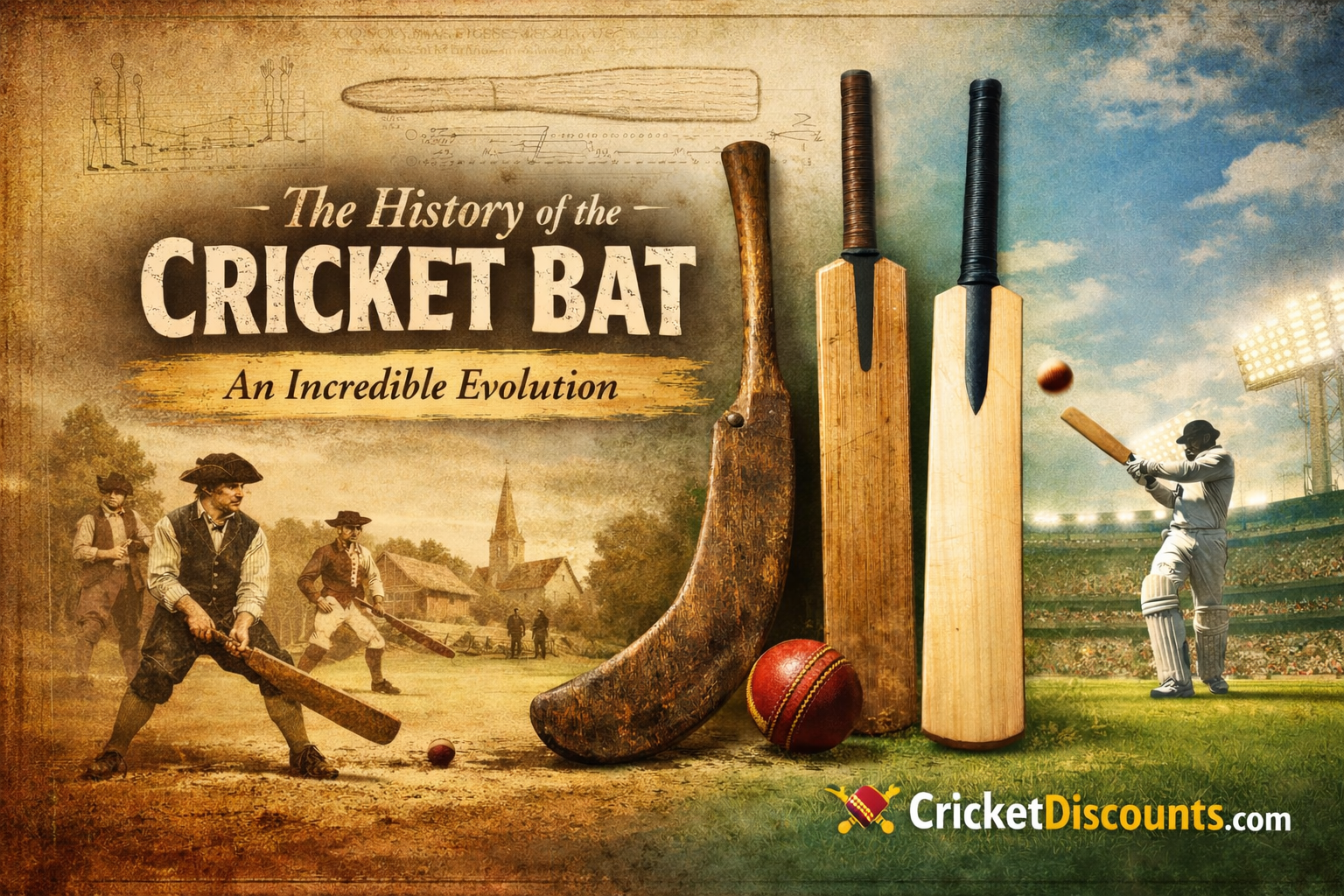
The History of the Cricket Bat: An Incredible Evolution
Have you ever picked up a modern cricket bat and marveled at its size? Modern bats are thick, powerful, and made of pristine willow. They are designed to send the ball into the stands with ease. But cricket did not always look this way. If you traveled back in time to the origins of the game, you might not even recognize the equipment.
The history of the cricket bat is a journey of innovation and survival. It is a story about how batters adapted to bowlers changing their tactics. The very first bats looked more like hockey sticks than the blades we see today. They were heavy, curved, and rough.
As the rules of the game changed, the bat had to change with them. From simple shepherd's clubs to high-tech willow tools, the evolution is fascinating. In this guide, we will explore how a simple piece of wood became the defining tool of our sport.
Background and Early History of the Topic
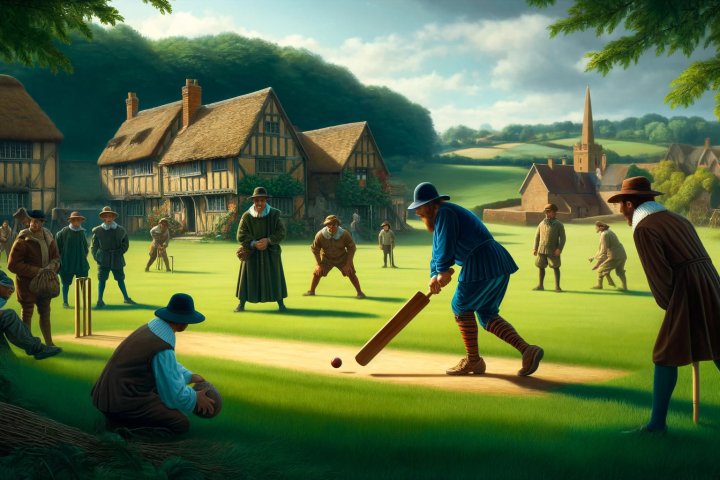
To understand the cricket bat, we have to look at how cricket was played centuries ago. In the early 1700s, bowling was very different. Bowlers did not pitch the ball. They did not throw the ball through the air. Instead, they rolled the ball along the ground at a fast pace. This was known as "underarm" bowling.
Because the ball skimmed the grass, batters did not need to play vertical shots. They needed to sweep the ball away. This is why the earliest bats looked like shepherd’s crooks or field hockey sticks. They had a long handle and a heavy, curved end. This shape was perfect for hitting a rolling ball hard.
The Oldest Surviving Bat
The oldest cricket bat still in existence dates back to 1729. It is currently kept in the archives at The Oval in London. It looks very different from the bat of a modern player like Joe Root or Virat Kohli.
Here are the features of the 1729 bat:
- Shape: Like a large, heavy spoon or paddle.
- Weight: It was surprisingly light compared to modern expectations, but unbalanced.
- Material: Early bats were often carved from a single piece of wood.
- Usage: It was designed strictly for hitting across the line of the ball.
This bat captures a specific moment in history. It tells us that cricket began as a rustic game played on village greens. The design was simple because the game was simple. However, as bowlers got smarter, the history of the cricket bat took a dramatic turn.
Key Events and Major Milestones
The evolution of bat design was rarely accidental. Usually, a rule change or a new bowling style forced batters to innovate. Here are the major turning points that gave us the modern bat.
The Shift to Length Bowling (1760s)
In the mid-18th century, a group of players called the Hambledon Club changed cricket forever. They began pitching the ball rather than rolling it. The ball would bounce off the turf and rise toward the batter.
The old "hockey stick" bat was useless against bouncing balls. You cannot sweep a bouncing ball effectively with a crooked stick. Batters realized they needed to hit the ball straight back past the bowler. To do this, they needed a straight piece of wood.
By the 1770s, the bat had straightened out. The curve disappeared. The blade became parallel, which allowed for the first defensive shots and drives. This was arguably the biggest change in cricket gear history.
The Monster Bat Incident (1771)
Cricket has always had players who try to bend the rules. In 1771, a player named Thomas "Shock" White walked onto the field with a massive bat. It was as wide as the wickets.
His plan was simple. If his bat was as wide as the stumps, the bowler could not bowl him out. He simply blocked everything. The opposing team, led by Hambledon captain Richard Nyren, was furious. They lodged a formal protest immediately.
This incident led to the first law restricting bat size. The officials decided that a bat could not be wider than 4.25 inches. Amazingly, this rule from 1771 still exists today. The length of the bat was also eventually capped at 38 inches.
The Discovery of Willow and Cane (1800s)
For a long time, bats were made of heavy, solid wood. They were carved from a single piece of timber. This caused a problem. When a hard leather ball hit a solid piece of wood, the vibrations were painful. It stung the batter's hands.
In the 1830s, bat makers realized that willow was the best wood for cricket. Specifically, Salix alba caerulea, or cricket bat willow.
- Why Willow? It is a soft, fibrous wood. It absorbs the shock of the ball while remaining durable.
- Spliced Handles: Instead of one solid piece, makers began splicing (joining) a cane handle into the willow blade. Cane is flexible. This design acted like a spring, generating more power and reducing the shock to the hands.
By the late 19th century, the cricket bat looked very similar to what we use today.
Fun Facts and Lesser-Known Stories
The journey of the cricket bat is filled with strange experiments. While willow remains king, many have tried to introduce different materials. Some were genius, while others were banned immediately.
The Dennis Lillee Aluminum Bat
In 1979, during a test match in Perth, Australian fast bowler Dennis Lillee walked out with a metal bat. It was called the "ComBat" and was made of aluminum.
When Lillee hit the ball, it made a loud "clank" sound instead of a wooden "thock." The English captain, Mike Brearley, complained to the umpires. He argued that the metal bat was damaging the leather ball.
After a long argument, Lillee angrily threw the aluminum bat away and called for his willow one. Shortly after this match, the laws of cricket were updated. The rules now state explicitly that the blade must be made solely of wood.
The Mongoose Bat
In 2010, Australian opener Matthew Hayden introduced the "Mongoose." This bat had a very long handle and a very short blade. It looked ridiculous, almost like a giant lollipop.
The theory was simple. By removing the top of the blade (where the ball rarely hits), the bat became lighter. This allowed the batter to swing much faster. For T20 cricket, it was a dangerous weapon. Hayden scored 93 off 43 balls using it in an IPL match. However, the design had flaws. It was terrible for defense, and it eventually faded away.
Graphite Backings
Great players like Ricky Ponting tried to use technology to their advantage. In the mid-2000s, bats appeared with a thin strip of carbon graphite on the back. This was meant to strengthen the blade. However, the Marylebone Cricket Club (MCC) investigated. They decided that this added too much power and gave an unfair advantage. Most artificial reinforcements are now banned.
Records, Impact, or Legacy in Cricket
The design of the bat dictates how the game is played. As bats have become better, the records have tumbled.
The Sweet Spot Revolution
In the 1970s and 80s, bats were quite thin. If you look at a bat used by Sir Donald Bradman, the edges are very flat. You had to hit the ball perfectly in the middle to score boundaries.
Today, bat technology involves pressing the wood to maximize the "sweet spot."
- Thick Edges: Modern bats have massive edges. Even a mishit can fly for six.
- Light Pickup: Despite being thick, bats feel light. Drying techniques reduce the moisture in the wood, making it easier to swing.
Heavy Bat Legends
Some players preferred weight over speed. Sachin Tendulkar was famous for using an incredibly heavy bat. His bat weighed close to 3 pounds. He believed the extra mass gave his shots more punch. Similarly, South Africa’s Lance Klusener used a heavy "Zulu" bat to bludgeon bowling attacks in the late 1990s.
The Balance of the Game
The improvement in the history of the cricket bat has caused controversy. Many bowlers feel the game is too easy for batters now. Because of this, the MCC introduced new restrictions in 2017. They limited the depth of the bat (how thick it can be from face to spine) to ensure an even contest.
Why This Topic Still Matters Today
Understanding the history of the cricket bat helps us appreciate the modern game. It explains why we have certain rules. For example, without the Monster Bat Incident of 1771, we might see batters holding shields instead of blades!
This evolution also highlights the craftsmanship involved in the sport. Even in a world of carbon fiber and 3D printing, cricket clings to tradition. Every professional bat is still made of English Willow. It is a natural product that requires care, oiling, and knocking in.
As technology continues to advance, the debate will continue. Companies are now putting sensors into bat handles to analyze swing speed and impact. We are entering a digital age of batting. Yet, the core principle remains the same. It is a battle between a bowler and a batter with a piece of wood.
To see how these historic designs compare to what players use now, you can check out the various types of willow grades available on the market today. Knowing the difference between Grade 1 English Willow and Kashmir Willow connects you to a tradition spanning three centuries.
Conclusion
From a curved branch used to whack a rolling stone, to the precision-engineered weapons of the IPL, the cricket bat has come a long way. The history of the cricket bat is a mirror of cricket itself. It shows a sport that honors its past but is constantly moving forward.
Whether you are an opening batsman or a backyard legend, your bat is part of a 300-year-old lineage. Next time you drive the ball through the covers, remember the generations of innovation that made that shot possible.
Explore more cricket history and fun facts on CricketDiscounts.com.

Leave a comment