
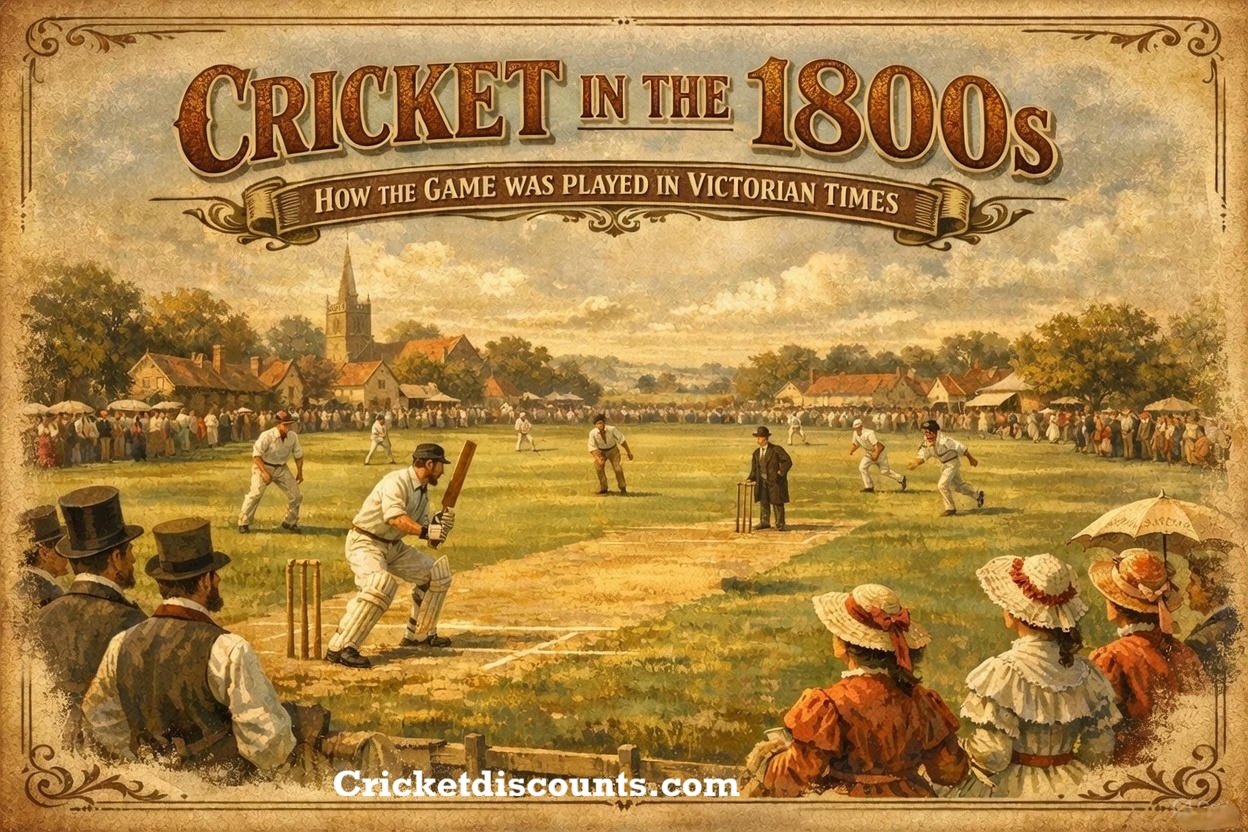
Cricket in the 1800s: How the Game Was Played in Victorian Times
Cricket in the 1800s looked very different from the fast-paced sport we know today. Played mainly on village greens and grand English grounds, the game reflected the values and social structure of Victorian society. Rules were still evolving, equipment was basic, and matches could last for days. Yet, this period laid the foundation for modern cricket.
The 19th century was a turning point. Cricket moved from a rural pastime to an organized sport with laws, clubs, and international matches. From underarm bowling to timeless Test matches, cricket in the 1800s shaped the techniques, traditions, and spirit that still define the game. Understanding this era helps fans appreciate how cricket became a global sport with deep cultural roots.
Background and Early History of Cricket in the 1800s
By 1800, cricket was already popular in England, especially among the upper classes. However, the game was far from standardized. Local rules varied, pitches were uneven, and matches were often social events rather than competitive contests.
Cricket in the 1800s was closely tied to Victorian values. Fair play, discipline, and gentlemanly conduct were central to the sport. Amateurs, known as “gentlemen,” often played alongside professionals, called “players.” This class divide influenced team selection, leadership, and even pay.
Key features of early 19th-century cricket included:
- Matches played in daylight only
- No protective gear like helmets or pads
- Heavy wooden bats with curved shapes
- Uneven pitches made of rolled grass
The Marylebone Cricket Club (MCC), founded earlier in 1787, became more influential during this century. It worked to unify the Laws of Cricket, bringing consistency to how the game was played across England.
Key Events and Major Milestones
The 1800s saw several major developments that transformed cricket from a local pastime into an international sport.
Standardization of Rules
One of the biggest changes was the formalization of rules. The MCC revised the Laws of Cricket multiple times during the century. Important updates included:
- Legalization of overarm bowling in 1864
- Standard pitch length fixed at 22 yards
- Defined boundaries and match durations
Overarm bowling changed batting forever. It allowed bowlers to generate more speed and bounce, making the contest between bat and ball more balanced.
Rise of County Cricket
County cricket became organized in the mid-1800s. Clubs like Sussex, Kent, and Yorkshire gained popularity. This structure helped develop talent and introduced regular competitive fixtures.
The County Championship was officially recognized in 1890. This milestone gave cricket a clear domestic structure that still exists today.
Birth of International Cricket
International cricket began during this era. The first official Test match was played in 1877 between England and Australia in Melbourne. This marked the start of cricket as a global sport.
The famous Ashes rivalry also began in the 1880s. It added drama, pride, and tradition to international cricket.
Fun Facts and Lesser-Known Stories
Cricket in the 1800s produced many fascinating stories that feel unusual by today’s standards.
- Matches often lasted three to five days with no result
- Players wore everyday clothing, not uniforms
- Umpires sat on chairs instead of standing
- Scores were recorded with chalk on boards
Some matches were stopped for tea breaks that lasted over an hour. Socializing was as important as competition.
Another interesting fact is that bats were once shaped like hockey sticks. This design suited underarm bowling but became outdated as bowling styles evolved.
Women also played cricket during the Victorian era, though mostly in private or exhibition matches. Their contributions were rarely documented but remain an important part of cricket history.
Records, Impact, and Legacy in Cricket
The influence of cricket in the 1800s can still be seen today. Many core elements of modern cricket were born during this period.
Playing Style and Technique
Victorian-era cricketers developed foundational batting techniques such as:
- Forward defensive strokes
- Straight bat play
- Emphasis on patience and endurance
Bowlers learned to use swing and seam movement, even without modern training tools.
Cricket Culture and Traditions
The traditions of fair play and sportsmanship grew stronger during the 19th century. The idea of “playing in the spirit of the game” became central to cricket’s identity.
Several iconic venues, like Lord’s Cricket Ground, gained legendary status during this time. These grounds became symbols of cricket’s heritage.
If you enjoy exploring how cricket evolved across different eras, you may like the History and Fun Facts About Cricket section on CricketDiscounts.com, which covers unique stories from the game’s past.
Why Cricket in the 1800s Still Matters Today
Understanding cricket in the 1800s helps fans see why the game values tradition as much as innovation. Many debates in modern cricket, such as format changes and rule updates, echo discussions from Victorian times.
The balance between bat and ball, respect for umpires, and love for long-form cricket all trace back to this era. Even modern Test cricket reflects the patience and endurance demanded in 19th-century matches.
For younger players and fans, learning about this period builds respect for the game’s journey. It shows how cricket adapted to social change while preserving its core values.
You can also explore other historical cricket topics and timelines in the cricket history articles available on CricketDiscounts.com.
Conclusion
Cricket in the 1800s was a game of patience, tradition, and gradual evolution. Played on uneven pitches with simple equipment, it reflected Victorian values of discipline and fair play. This era introduced standardized rules, county competitions, and international matches that shaped modern cricket. From the legalization of overarm bowling to the birth of the Ashes, the 19th century left a lasting legacy. Understanding this period deepens appreciation for cricket’s rich history and explains why the sport continues to balance tradition with change.
Explore more cricket history and fun facts on CricketDiscounts.com.



Leave a comment