

Best Cricket Bats for Power Hitters: Complete Buying Guide
Choosing the best cricket bat for power hitting can completely transform your game. Whether you are a beginner learning to clear the infield or an advanced player aiming to dominate the death overs, the right equipment makes a massive difference.
Power hitters rely on a specific combination of timing, bat speed, and solid contact. A poorly matched bat can limit your stroke play, reduce control, and increase fatigue. This comprehensive buying guide breaks down everything you need to know—from bat profiles and willow types to weight, balance, and common pitfalls—so you can walk to the crease with confidence.
Understanding Power Hitting in Cricket
Power hitting isn’t just about brute strength. If it were, only bodybuilders would excel at cricket. Instead, power hitting is a synergy of:
- Correct Bat Swing: The arc and flow of the bat.
- Fast Bat Speed: The velocity of the bat at the point of impact.
- Weight Distribution: How the mass of the bat moves through the ball.
- Sweet Spot Connection: Striking the ball where the willow performs best.
A bat designed specifically for power hitting helps transfer maximum kinetic energy into the ball while maintaining enough balance for you to control the shot.
Key Features of a Power Hitter’s Bat
To hit big sixes, you need a bat engineered for impact. Here are the specific features to look for.
1. Bat Profile and Spine Thickness
The profile refers to the shape of the bat when viewed from the side. For power hitters, mass matters.
- The Spine: A thick, high spine increases the amount of wood behind the sweet spot. This allows the ball to travel further even if you don't hit it perfectly.
- The Edges: Look for thick edges (38mm – 42mm). Thick edges ensure that off-center hits still travel to the boundary rather than getting caught in the infield.
- Face Profile: A "full" face (convex) usually provides more power than a flat face, though it adds weight.
2. Sweet Spot Position
The sweet spot is the area of the bat that generates the most ping and power. Your choice depends on the pitches you play on:
- Low Sweet Spot: Best for low-bouncing wickets (common in the subcontinent) and front-foot drivers.
- Mid Sweet Spot: The most versatile option. Ideal for all-round play and varying bounce.
- High Sweet Spot: Best for fast, bouncy tracks (like Australia) and back-foot players who cut and pull.
- Recommendation: Most power hitters prefer a Mid-to-Low sweet spot to maximize power on drives and slogs.
3. Bat Weight vs. "Pickup"
There is a myth that you need a heavy bat to hit sixes. While mass helps, bat speed is king.
- Dead Weight: The actual number on the scale (e.g., 2lb 10oz).
- Pickup: How heavy the bat feels when you lift it.
A bat with good distribution might weigh 2.10 lbs but feel like 2.8 lbs. Always prioritize a balanced pickup over raw weight. If you can't swing the bat fast, the ball won't travel.
General Weight Guidelines:
- Beginners: 2.7 – 2.8 lbs (Prioritize bat speed).
- Club Players: 2.8 – 2.9 lbs.
- Power Specialists: 2.10+ lbs (Only if you have the strength to maintain bat speed).
4. Handle Type and Grip
The handle acts as the steering wheel and shock absorber.
- Semi-Oval Handle: Prevents the bat from twisting in your hands upon impact. Excellent for maintaining alignment on power shots.
- Round Handle: Preferred by wristy players who like to manipulate the face of the bat.
- Grip: Use a high-quality rubber grip with extra cushioning to absorb the shock of hard-hitting shots.
Willow Types Explained: English vs. Kashmir
English Willow (The Pro’s Choice)
English Willow is the gold standard for power hitting. It is soft, fibrous, and offers incredible rebound (ping).
- Grade 1: The best looking and best performing. Instant power, but expensive.
- Grade 2-3: The "workhorse" grades. Excellent performance for club cricket with minor cosmetic blemishes.
- Grade 4: Good value. Harder wood that may take longer to open up but is very durable.
Kashmir Willow (The Budget Choice)
Grown in India, this wood is harder and heavier than English willow.
- Pros: Very durable and significantly cheaper.
- Cons: Less "ping" (rebound) and usually heavier.
- Verdict: Perfect for beginners or recreational cricket, but serious power hitters should upgrade to English Willow when possible.
Choosing the Right Bat for Your Skill Level
For Beginners
- Focus: Technique and timing.
- Recommendation: A lighter Kashmir willow or Grade 3/4 English willow bat (approx. 2.7 lbs).
- Why: A heavy bat will ruin your technique before you develop it.
For Club Players
- Focus: Performance and consistency.
- Recommendation: Grade 2 or 3 English Willow with thick edges and a mid-profile.
- Why: You need a bat that rewards good shots with boundaries.
For Advanced/Competitive Players
- Focus: Maximum power output.
- Recommendation: Grade 1 English Willow, custom weight distribution, pronounced spine, and a handle shape that suits your specific grip.
- Why: At this level, marginal gains in equipment quality can decide the match.
Common Mistakes to Avoid
- Buying "Too Heavy": If you are dragging the bat during your backlift, it is too heavy. You will be late on fast bowling.
- Ignoring the Pickup: Never buy a bat based solely on the scale weight. Swing it (shadow practice) to feel the balance.
- Wrong Sweet Spot: Don't buy a low-sweet-spot bat if you play on bouncy concrete or matting wickets; you'll constantly hit the ball on the splice (handle base).
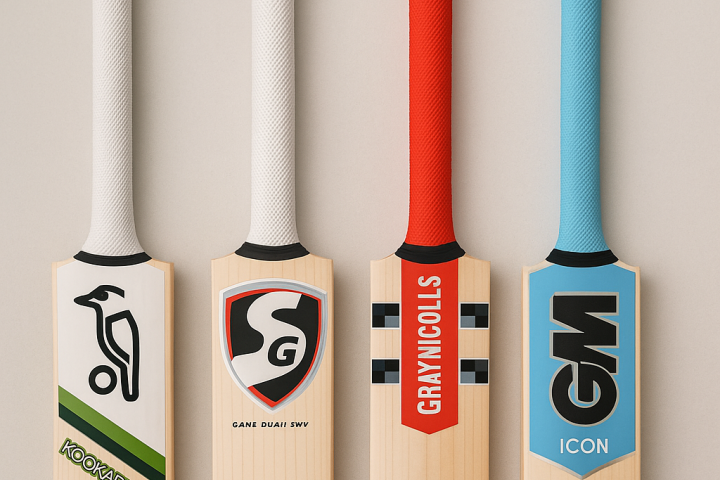
- Aesthetics Over Performance: A bat with too many stickers or a fancy look doesn't guarantee runs. Trust the wood, not the graphics.
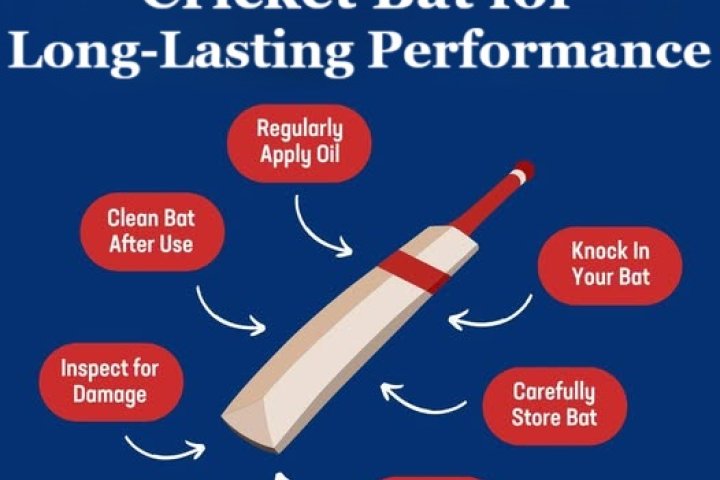
Maintenance: Keep Your Weapon Sharp
A cricket bat is a natural product and requires care.
- Knocking-In: Essential for English Willow. Compress the fibers using a bat mallet to prevent cracking.
- Anti-Scuff Sheet: Apply a clear face sheet to protect against surface cracks and moisture.
- Toe Guard: The toe is the weakest part of the bat. Use a rubber toe guard or "Shoe Goo" to prevent swelling from damp pitches.
- Proper Storage: Keep the bat in a cool, dry place. A hot car trunk will dry out the willow and make it brittle.
Frequently Asked Questions (FAQs)
1. Are heavier cricket bats always better for hitting sixes?
No. Power is calculated as Mass x Speed. If a bat is too heavy and your swing speed drops, you will actually generate less power. Find the heaviest bat you can swing fast.
2. Which willow is best for power hitting?
English Willow is superior due to its natural moisture content and elasticity, which creates a "trampoline effect" off the face.
3. What is the ideal edge thickness for a power bat?
Aim for edges between 38mm and 42mm. This thickness expands the effective hitting area.
4. Can I use a power-hitting bat against a bowling machine?
Be careful. The hard plastic balls used in bowling machines can damage high-quality English willow. Use an old bat or a specialized practice bat for machine work.
Final Thoughts
Selecting the best cricket bat for power hitters is about finding the perfect balance between mass and maneuverability. It’s not just about buying the biggest piece of wood on the shelf; it’s about finding a bat that feels like an extension of your arms.
Prioritize a good pickup, the right sweet spot for your local pitches, and the highest grade of willow your budget allows.
Ready to upgrade your game? Explore high-quality cricket gear at discounted prices on CricketDiscounts.com and find the equipment that matches your playing style today.

Leave a comment